
A city in Rocklin
A city in Rocklin
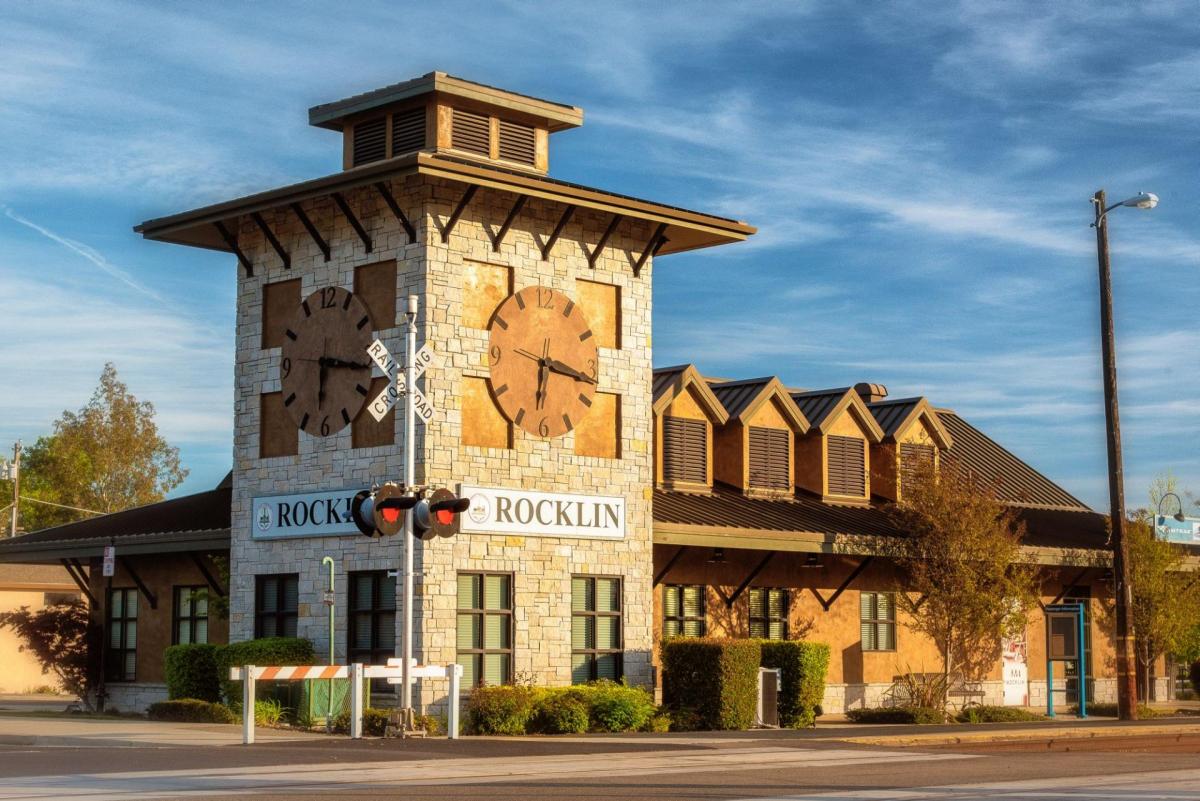
City of Rocklin
On January 18, 1863, the CP broke ground near Amtrak station in downtown Sacramento. It could take up to eight months to ship most of the supplies, except the wood ties, from the East Coast to California. By May 1864, more than twenty miles of tracks were in place from the small settlement near Rocklin Secret Ravine to the small settlement near the railroad. A large outcropping of granite in the area proved valuable for constructing tunnels and culverts. As a result of their railroad jobs, Irish immigrants settled in towns along the route, including Rocklin.
In the Victorian era, there was an explosion of innovative technologies that marked the CP's construction. As a testament to the skilled laborers who primarily used pick and shovels and nitroglycerine to build railroad infrastructure, the Sierra Nevada mountains are famous for their railroad infrastructure. Immigrants from southern China were frequently given the most dangerous jobs. A year later, CP crews crossed the Nevada state line, connecting with Union Pacific.
In an 1864 schedule, the village by the tracks was referred to as Rocklin, instead of Secret Ravine. There is no definitive answer to the origin of the name, but granite is almost certainly the cause of the name. CP's right-of-way allowed James Bolton to divide his farm in order to foster the growth of a downtown. The CP built a roundhouse in Rocklin the following year, which immediately attracted new settlers. This depot was across the tracks from the present depot and contained 25 stalls and a roundtable. In the nearby woods stood a large shed.
As the right-of-way moves further into the Sierra Nevada, Rocklin marks the point where the slope begins to steepen. In order for the trains to traverse the approximately 90 miles to the summit, extra helper locomotives had to be added to the trains to increase horsepower. A large amount of wood was required to power each locomotive up the incline, which also influenced where the roundhouse would be built. CP employed approximately 300 residents by the end of the century, half of whom were involved in locomotive maintenance. During the roundhouse's construction, businesses, eateries, and hotels were built along First Street and Railroad Avenues, and Granite Road (now Rocklin Road) was transformed into the town's center.
First passenger depots were built in the late 1860s in the approximate area of the current station, but were destroyed by fire in 1891. In 1873, the depot's roundhouse burned, but it was rebuilt. Simple wooden rectangles with gabled roofs dominated the building. Snow and rain were protected by overhanging eaves. In a projecting bay with windows, the station master could monitor traffic on the line. On the other side of the tracks stood a freight house that closely resembled the depot; crates and parcels were loaded directly from boxcars onto carts and wheeled directly into the storeroom.
Local industries were boosted by the railroad's presence. Coastal California cities could ship Rocklins granite via rail cars because of its hardness and fine grain. Granite from the Rocklin region was used to construct the state capitol in Sacramento as well as the U.S. Mint and Palace Hotel. There were over a dozen quarries operating around 1900, varying in size but employing hundreds of workers. In addition to Finnish laborers, Russians, and Italians also contributed to the city's development.
The introduction of irrigation made the area encompassing Rocklin, Loomis, Penryn, and Newcastle ideal for fruit farming. There were plums, peaches, grapes, pears, and berries growing in the west sloping hills due to the moderate temperatures. From 1910 to 1920, Placer County shipped approximately 221 million pounds of fresh fruit to cities across the nation by boxcar. J.P. Whitney experimented with diverse crops on his Spring Valley Ranch, which grew to more than 27000 acres. As one of the earliest growers of Muscat grapes, he made raisins after drying them. At a time when fresh fruits were rare, raisins were greatly valued. A specialist in hardy navel oranges, Whitney also pioneered the cultivation of citrus trees in northern California. Because of the climatic conditions in the foothills, they ripen 6-8 weeks sooner than their counterparts in the south, and were among the first to be shipped to the East.
Social Cali Digital Marketing Company
Address: 2237 Apple Grey Ct, Rocklin, CA 95765
Phone: (916) 796-1220
Website: https://www.socialcali.com/rocklin-digital-marketing-agency